|

Kitchen waste fed into the intelligent treatment equipment undergoes several pre-processes including lifting, weighing, sorting, crushing and dewatering, then is sealed and conveyed to the main fermentation chamber for rapid degradation and maturation. Oil-water separation is completed inside the equipment to recover waste oil; wastewater is discharged into a purification tank, exhaust gas is deodorized through a tower before release, and the final degraded product is automatically discharged after passing inspection.
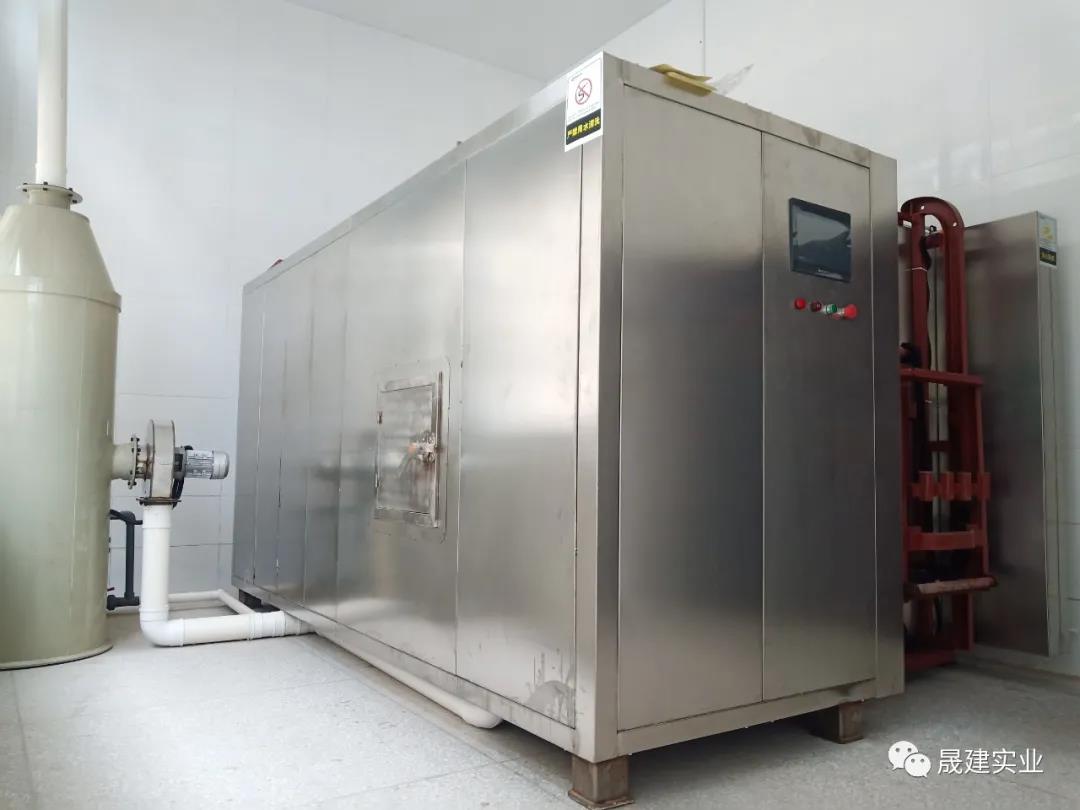
Appearance of the Intelligent Kitchen Waste Treatment Equipment
图片
Equipment Structure (partially optional)
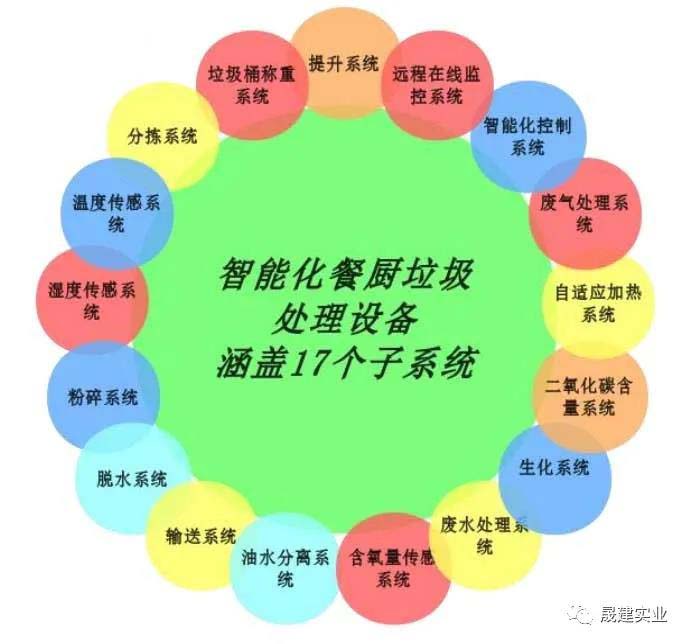
Main Units:
1. Automatic lifting device: performs mechanical lifting, tipping and weighing of materials, requiring no manual assistance except for operating the lift switch.
2. Sorting platform: separates visible large inorganic objects (such as plastic bags, cans, bottles and stones); invisible ones are of little consequence.
3. Crushing device: rapidly pulverizes materials, breaking large pieces into small ones that are easy to ferment.
4. Solid-liquid separator: removes water from materials by physical means and effectively separates materials from wastewater.
5. High-temperature aerobic fermentation chamber: handles various organic wastes such as vegetables, fruits, kitchen and catering waste and mixtures. The associated process inactivates pathogens and eggs, while achieving degradation and maturation for harmlessness, volume reduction and resource recovery.
6. Auxiliary heating system: maintains suitable fermentation conditions in the chamber; with an infrared temperature sensor, it automatically adjusts heating output and provides overheat protection.
7. Automatic control system: through electrical control modules or software commands following preset workflows, the whole system runs automatically without manual intervention, with a manual control interface also provided.
8. LCD interface system: intuitively displays the real-time operating status of the equipment and allows effective operation.
9. Oil-water separation system: separates water and grease in wastewater through an oil separator and collects the waste oil.
10. Automatic discharge device: mechanically discharges materials from the chamber, with the final product exiting the system as a solid powder.
11. Exhaust gas treatment device: employs multiple deodorization technologies including water spray and bio-deodorization, with a gas retention time of ≥30 s.
12. Wastewater treatment device: purifies wastewater generated during processing to meet discharge standards.
Technical Advantages
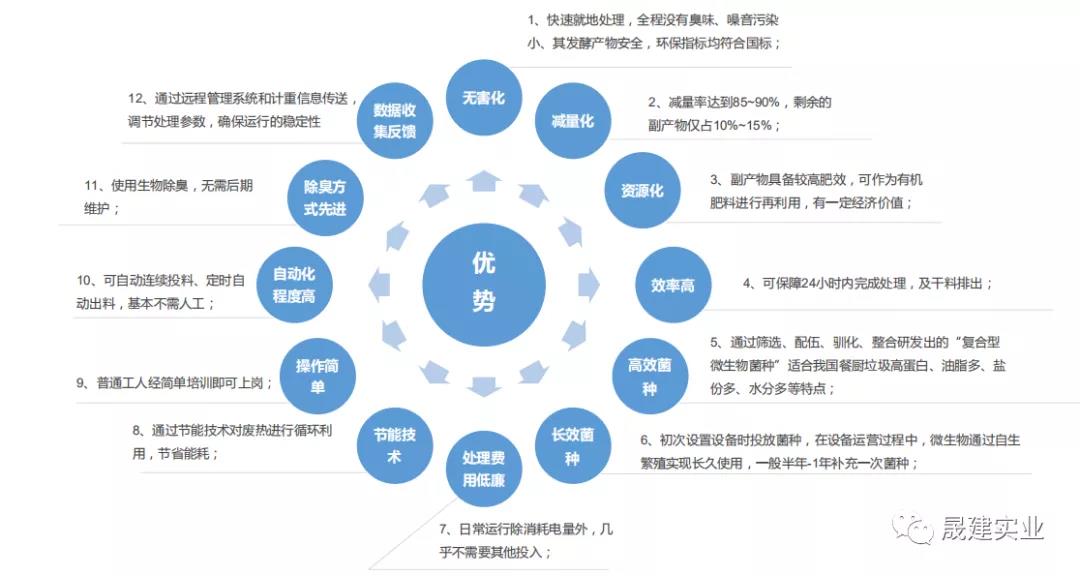
Process Flow Diagram
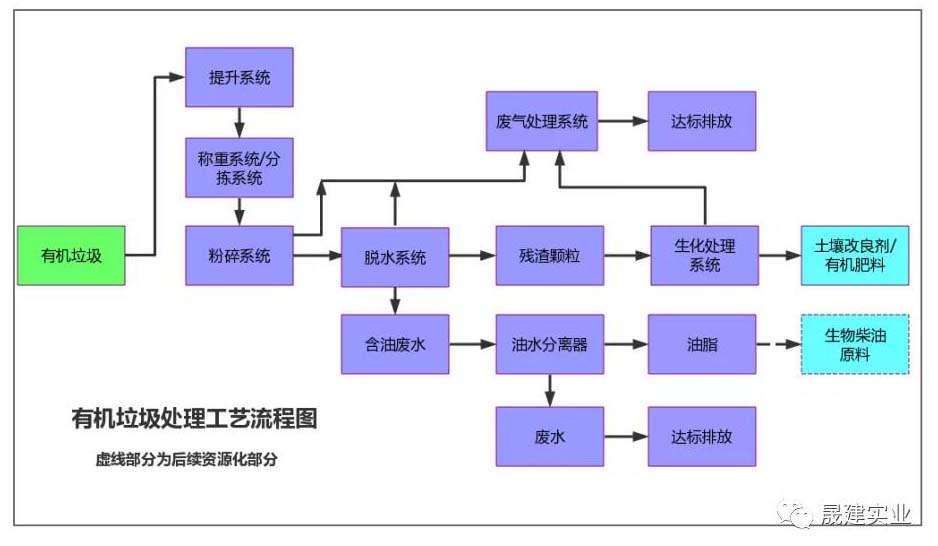
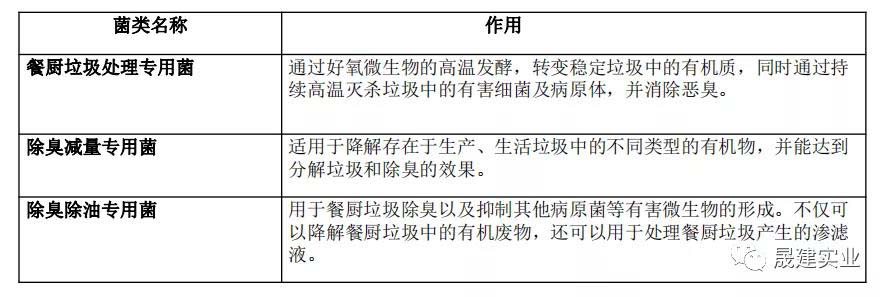
Selected Bacterial Strains
After fermentation with specialized bacteria, odor disappears and moisture is removed, avoiding the farmland occupation of landfilling and the air pollution of incineration, while providing bio-organic fertilizer plants with an affordable organic material source after the state banned humic acid as a raw material. Kitchen waste contains different types of organics, requiring specialized deodorizing and volume-reducing bacteria to decompose and reduce it. As kitchen waste contains large amounts of water, oil and inorganic salts, dewatering and degreasing must precede fermentation. In view of these characteristics, specialized kitchen-waste treatment, deodorizing/volume-reducing and deodorizing/degreasing bacteria are used.
|