|
A Brief History of Water Treatment Technology: Electrodialysis
Industry News | Shengjian Environmental Technology (Wuhan) Co., Ltd. Electrodialysis (ED) may be the most ingenious membrane separation process. It not only cleverly uses two membranes with completely opposite functions, but also subtly controls the migration of charged ions in water through an invisible electric field. As a water treatment and separation technology, it is widely used in brackish water desalination, seawater concentration, wastewater reuse and process separation. Over its 130-year development history, electrodialysis technology has experienced both breakthroughs and brilliance, as well as uncertainty and anticipation. 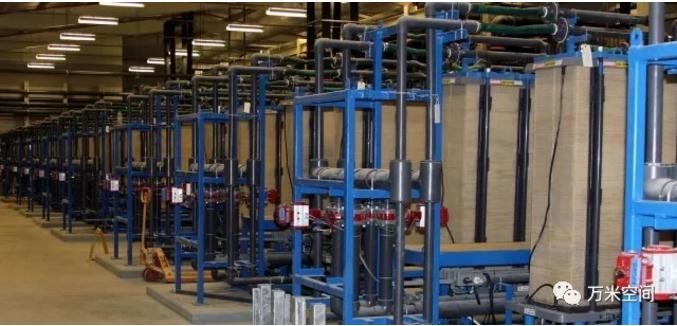
Electrodialysis desalination plant (image from the Internet) Part I Early Exploration As the name suggests, electrodialysis is based on the process of dialysis. The dialysis process cannot do without dialysis membranes. The characteristic of a dialysis membrane is that small-molecule solutes or electrolyte ions can pass through, while macromolecules or colloidal substances cannot. If a colloidal solution containing a small-molecule electrolyte is placed in pure water through a dialysis membrane, the small-molecule electrolyte will diffuse through the membrane into the pure water due to the concentration difference, and the colloidal solution will thus be purified. This is the dialysis process. When discussing dialysis, it seems impossible not to mention osmosis. Both are separation processes that rely on membranes and concentration-diffusion; the main difference lies in the selective permeability of the membranes. Unlike dialysis membranes, osmosis membranes allow only water molecules to pass through, while small-molecule solutes or electrolyte ions cannot. Dialysis takes place in our bodies every day and is one of the main principles by which the human kidneys function. Patients with impaired kidney function develop uremia and need hemodialysis treatment, which mainly makes use of dialysis membranes and the dialysis process. In 1748, the French physicist Jean-Antoine Nollet used a pig's bladder as a semipermeable membrane and discovered that water in a low-concentration alcohol solution passed through the membrane into a high-concentration alcohol solution, observing the phenomenon of osmosis experimentally for the first time. In 1854, Thomas Graham, a chemist at the University of Glasgow in the United Kingdom, used parchment as a dialysis membrane and described for the first time the dialysis of substances such as sodium chloride. The earliest concept of electrodialysis originated in Germany. In 1890, the Germans E. Maigrot and J. Sabates used carbon electrodes, introducing an electric field into the dialysis process for the first time and using permanganate-impregnated paper as a dialysis membrane to accelerate the purification of sugar syrup. In 1902, the German G. Schollmeyer used the term 'electrodialysis' for the first time in a patent describing a similar process. In 1911, the British chemist Frederick G. Donnan experimentally studied the uneven distribution of electric charges on the two sides of a semipermeable membrane caused by differences in the permeability of different electrolytes, the so-called Donnan equilibrium. In 1914, A. Bethe and T. Toropoff first discovered that the pore walls of dialysis membranes such as collodion, permanganate-impregnated paper and gelatin membranes carry a certain fixed negative charge. In 1929, W. Pauli and E. Yalko first described a three-compartment electrodialysis device in which anions and cations in the feed solution placed in the middle compartment migrated into the anode and cathode compartments respectively under the action of an electric field. In 1935, T. Teorell established the theory of charged membranes, recognizing that cation-selective membranes contain fixed negative ions and anion-selective membranes contain fixed positive ions. In 1939, E. Manegold and C. Kalauch used both anion-selective and cation-selective membranes simultaneously in a three-compartment electrodialysis device for the first time. In 1940, K. H. Meyer and W. Strauss first proposed that by arranging repeating units of alternating anion and cation membranes in an electrodialysis device, alternating concentrate and dilute compartments would be created under a direct-current electric field. This concept laid down the basic structure of the modern electrodialysis stack and was a milestone. 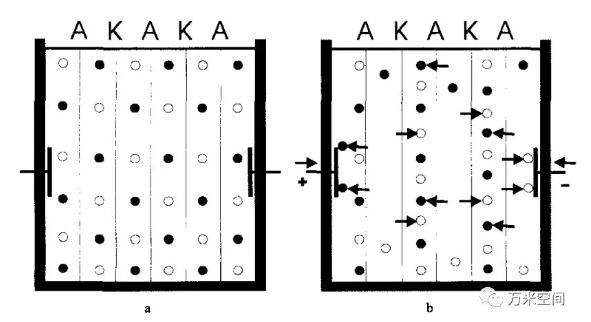
Meyer-Strauss membrane stack (image from the literature) To turn the genius idea of Meyer and Strauss into reality, a prerequisite was needed: the anion and cation membranes used had to possess sufficiently excellent ion selectivity. But the best dialysis membranes at the time had a conductivity of only 0.15 mS/cm and an ion exchange capacity of only 0.03 mmol/g, far from meeting the requirement. Nevertheless, this idea was like a beacon, pointing later researchers in a clear technical direction. Part II Technological Breakthroughs In 1949, a major breakthrough was made in the preparation of ion-selective membranes. In July of that year, the American scientist Walter Juda and his colleague Wayne A. McRae prepared the first ion exchange membrane in the modern sense and filed the first patent (US2636851). They were the first to hit upon the idea of preparing electrodialysis membranes from ion exchange resin materials with high charge density. Ion exchange resins were also a novelty at the time. Although people had long observed that some natural inorganic materials possessed ion exchange capacity, it was not until 1935 that the British chemists Basil A. Adams and Eric L. Holmes first invented organic ion exchange materials, namely phenolic ion exchange resins. Around 1947, styrene-based ion exchange resins—later to become the mainstream ion exchange materials—were also invented. The next question was how to prepare electrodialysis membranes with ion exchange resin materials. Researchers with a materials background could easily think of two major routes: one was to start from commercial ion exchange resins, add a binder and press them into a thin film in a certain way; the other was to start from monomers and directly form a thin film through polymerization and functionalization. The former yields heterogeneous membranes, the latter homogeneous membranes. Juda and McRae tried both routes. They not only made three heterogeneous ion exchange membranes from commercial ion exchange resins of Rohm and Haas and Dow Chemical respectively, but also produced two homogeneous membranes through polymerization: a phenolic cation exchange membrane and a melamine anion exchange membrane. The ion exchange membranes prepared by Juda and McRae had conductivities exceeding 25 mS/cm when measured in 0.1 M potassium chloride solution and dry-basis ion exchange capacities exceeding 0.8 mmol/g. This meant that they had directly improved the performance of electrodialysis membranes by two orders of magnitude! In July 1949, the very month they filed their patent, Juda publicly announced this technological breakthrough at the Gordon Conference, which soon attracted widespread attention and follow-up research. In February 1952, The New York Times even reported on the ion exchange membrane invented by Juda and McRae as a cover story. As the key figure in the invention of the modern ion exchange membrane, Juda's experience is worth a few more words. In 1916, Juda was born into a Jewish family in Berlin, Germany. In 1933—the year Hitler became Chancellor of Germany—the 17-year-old fled to Switzerland as a refugee. 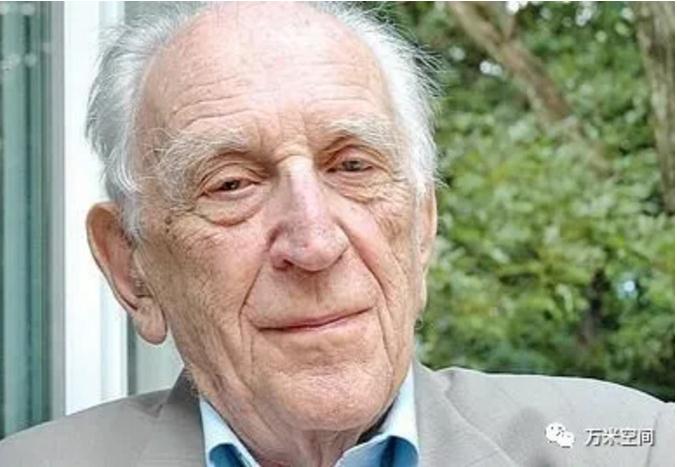
Walter Juda In 1939, Juda obtained a doctorate in physical chemistry in France. That same year, with the help of his sweetheart, he obtained a U.S. student visa and entered Harvard University. In 1944, he graduated from Harvard and stayed there to conduct research. Around 1946, Juda began to get involved in research on ion exchange processes. In 1948, the 32-year-old Juda moved from Harvard's Department of Chemistry to MIT's Industrial Cooperation Division and co-founded with Professor Edwin R. Gilliland and others the company later to be famous as Ionics. Juda served as executive vice president and technical director, while Gilliland—seven years his senior and more influential—became CEO. In 1956, Juda and McRae also filed the first patent for an electrodialysis process using polarity reversal (US2863813). In 1960, at the age of 44, Juda left Ionics and turned his interest to fuel cells and new energy. He went on to found two more companies and was a respected innovator until his death at the age of 95. Part III Commercial Applications Founded in 1948, Ionics was not only the inventor of the modern ion exchange membrane, but also the leader in the commercial application of electrodialysis technology. In its early years, the company tried some seawater desalination applications, then focused its market on the more economical brackish water desalination, and later expanded into whey desalination, wastewater reuse and other fields. In December 1953, Ionics sold its first electrodialysis unit to a Saudi oil company, formally opening the curtain on the commercial application of electrodialysis technology. In 1957, Ionics installed the first electrodialysis unit in the United States in the small town of Coalinga, California. By 1970, Ionics had installed 208 electrodialysis units with a total capacity of 24,000 tons/day. In 1974, an 11,000 tons/day electrodialysis plant was built at Foss Reservoir, Oklahoma, becoming the world's largest membrane desalination plant at the time. Electrodialysis technology also continued to advance. In 1974, Ionics officially launched polarity-reversal electrodialysis (EDR) units, which became the new standard for brackish water electrodialysis. In 1987, Millipore in the United States produced the world's first commercial electrodeionization (EDI) product. At the same time, reverse osmosis technology was maturing and posed fierce competition to electrodialysis. By the mid-to-late 1980s, electrodialysis was gradually on the defensive in the brackish water desalination market and began to focus on applications with a high scaling tendency, high recovery requirements and only partial desalination. In 1995, the largest EDR unit in the United States was built in Sarasota County, Florida, with a product water capacity of 45,000 tons/day and a recovery rate of 85%. In 2005, GE acquired Ionics for USD 1.1 billion. In 2009, the world's largest EDR desalination plant, built by GE, was officially commissioned in Abrera, Spain. The plant partially desalinates river water for use as a drinking water source, with a product water capacity of 200,000 tons/day, using 576 EDR stacks with 600 membrane pairs each. This may remain an unsurpassed splendid memory in the history of electrodialysis development. In 2017, GE's electrodialysis business was sold together with GE Water to SUEZ for USD 3.4 billion. Ion exchange membranes and electrodialysis technology also developed in Europe. In November 1949—only four months after Juda announced his breakthrough—T. R. E. Kressman, a scientist at The Permutit Company in London, submitted a paper to Nature and published similar research results in April 1950. Around 1975, the Czechoslovak Ministry of Uranium Industry established a central laboratory to study environmental problems in uranium mining and downstream processing. One research group, led by Dr. Lubos Novak, focused on the application of membrane technology in water treatment and industrial processes. In 1985, they produced their first heterogeneous ion exchange membrane. At the end of 1992, Czechoslovakia disintegrated, and Dr. Lubos Novak and his team, drawing on their previous research results, founded a company. This was MEGA. Japan's ion exchange membranes and electrodialysis technology are a unique case. Their main objective was to concentrate seawater to produce salt. As early as 1950, Tokuyama Soda began researching ion exchange membranes in Japan. In 1961, Asahi Kasei built an electrodialysis seawater concentration plant with an annual salt output of 50,000 tons, concentrating seawater to over 15%. In 1969, Japan produced 300,000 tons of salt by electrodialysis, about 30% of the total. Because the electrodialysis concentration process occupies a small area and has relatively low costs, Japan legally abolished salt production by the solar salt field method in 1972 and switched entirely to the electrodialysis-evaporation method. To this day, Japan's annual salt production remains around 1 million tons, with the remaining 7 million tons relying on imports. The scale of Japan's salt industry has remained stable for many years and the electrodialysis industry has become saturated. In 1995, Tokuyama Soda and Asahi Kasei merged their ion exchange membrane businesses to form Astom. Another well-known Japanese supplier of ion exchange membranes is AGC Inc. (Asahi Glass Company), which was renamed AGC Corporation in 2018. In addition to the well-known companies mentioned above, foreign ion exchange membrane and electrodialysis technology companies currently on the market also include Germany's Fumatech and Japan's Fujifilm, among others. Part IV Electrodialysis in China In 1958, Mr. Zhu Xiuchang of the Institute of Chemistry of the Chinese Academy of Sciences published a paper entitled 'Manufacture of Ion Exchange Membranes and Desalination and Concentration of Solutions by Electrodialysis' in the journal Polymer Communications, introducing the principles and preparation methods of ion exchange membranes and the principles of electrodialysis, and reporting their preliminary results in trial-manufacturing ion exchange membranes and electrodialysis spacers. Also participating in this research was Assistant Researcher Shi Song of the Navy Logistics Department. This was the starting point of Chinese scholars' research on electrodialysis technology. In 1960, they successfully developed a polyvinyl alcohol ion exchange membrane. In 1965, the first-generation electrodialysis seawater desalination unit, composed of nylon-mesh PVC spacers and polyvinyl alcohol heterogeneous ion exchange membranes, entered field trials and was applied at the construction site of the western section of the Chengdu-Kunming Railway. After 1966, trial production of polyethylene heterogeneous ion exchange membranes began. In 1967, the State Science and Technology Commission and the National Oceanic Administration organized a nationwide campaign for seawater desalination. Shanghai was mainly responsible for electrodialysis technology R&D, with researcher Shi Song serving as technical director. That same year, heterogeneous ion exchange membranes were officially put into production at the Shanghai Chemical Plant, marking the start of China's membrane industry. The Shanghai Chemical Plant mainly produced styrene sulfonic acid cation exchange membranes and styrene quaternary amine anion exchange membranes. The preparation method involved drying anion and cation exchange resins and grinding them into fine powder, adding a polyethylene binder, and hot-pressing the mixture with nylon mesh on both sides. For a long time, the Shanghai Chemical Plant supplied the vast majority of ion exchange membranes required by the Chinese market. In 1970, some of the participants in the campaign gathered at the Second Institute of the National Oceanic Administration and established a seawater desalination research laboratory, with Shi Song as deputy director; the main base for electrodialysis technology research moved to Hangzhou. In 1974, Hangzhou began producing a batch of small electrodialysis seawater desalination units with a capacity of 5 tons/day for use by the military in coastal and island areas. 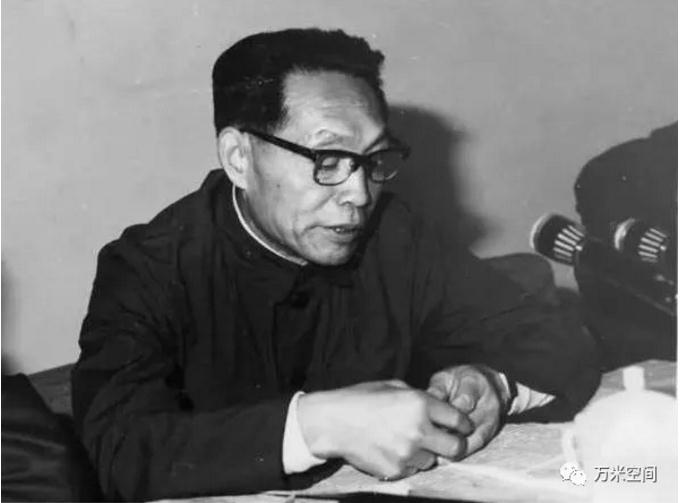
Researcher Shi Song In 1975, the Second Institute of the National Oceanic Administration was tasked with designing and building a 200 tons/day electrodialysis seawater desalination unit for the military. Under the leadership of researcher Shi Song, a ten-stage system design was finally adopted, with membrane sheets measuring 400 mm × 1,600 mm; the first five stages used 200 membrane pairs and the last five stages 300 membrane pairs. In 1978, the system was trial-operated for 1,500 hours on Meishan Island, Zhejiang, achieving a water recovery rate of 30% and power consumption of 16.5 kWh per ton of water. In 1981, the unit was formally installed on Yongxing Island in the Xisha Islands, becoming the world's largest electrodialysis seawater desalination station. 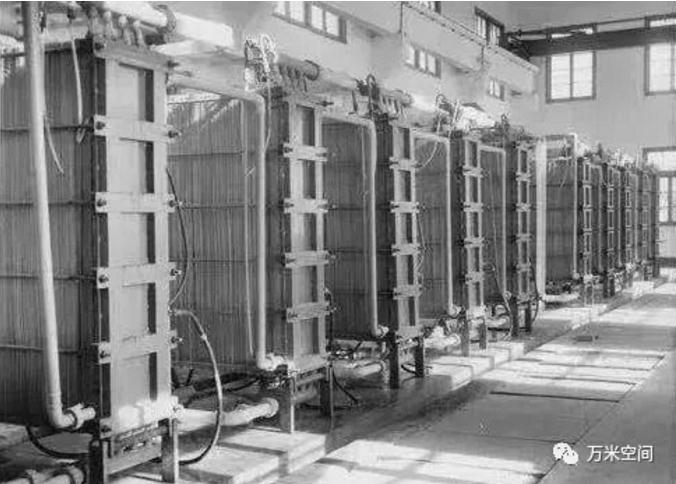
Xisha electrodialysis water station In 1978, Shanghai Jinshan Petrochemical built a 6,000 tons/day electrodialysis demineralized water station, which for a long time afterwards was the largest electrodialysis water station in China. Between 1986 and 1989, a number of coal mines in Datong, Xuzhou and other places also built electrodialysis water stations producing more than 1,000 tons per day. In 1987, continuous-roll polyethylene heterogeneous ion exchange membranes went into production. In 1988, China's annual output of ion exchange membranes exceeded 300,000 square meters, approaching Japan's and accounting for one third of the world total. By 1989, more than 4,000 electrodialysis units were in operation nationwide. At the same time, domestic research on electrodialysis technology was greatly affected by the rise of reverse osmosis technology. Electrodialysis technology and its industry were almost at a standstill for a long time thereafter. In the last decade or so, as national environmental policies have become increasingly stringent, electrodialysis technology has attracted renewed attention in industrial wastewater reuse and specialty separation. A number of emerging electrodialysis companies have been established in China, including Shandong Tianwei (founded in 2003), Hangzhou Lanyan (founded in 2009) and Beijing Tingrun (founded in 2010). These manufacturers have also begun to produce their own core products such as homogeneous membranes and bipolar membranes. Part V Summary and Outlook Modern electrodialysis technology has gone beyond the scope of the traditional concept of dialysis. Counting from 1890, when Maigrot first introduced an electric field into the dialysis process, electrodialysis technology has developed for 130 years. Among other things, the electrodialysis stack design proposed by Meyer and Strauss established the most important technical direction for the development of electrodialysis, while the ion exchange membrane invented by Juda and McRae provided the most important technical foundation for its practical application. The contribution of Juda and McRae to electrodialysis is comparable to that of Sidney Loeb and Srinivasa Sourirajan to reverse osmosis. The fact that Juda and McRae were able to invent the ion exchange membrane was closely linked to the development and maturity of ion exchange resin technology at the time. If opportunity favors only the prepared mind, then Juda's research on ion exchange processes in the years before his invention of the ion exchange membrane was the best preparation. As desalination technologies, electrodialysis and reverse osmosis are essentially similar in that both achieve separation by inputting energy to make substances migrate across a membrane—except that in electrodialysis the migrating species are charged ions, whereas in reverse osmosis they are water molecules. Electrodialysis achieved its technological breakthrough about ten years earlier than reverse osmosis, giving it a certain head start. However, the rapid later development of reverse osmosis severely squeezed the development space of electrodialysis. Viewed in terms of application purpose, conventional electrodialysis is mainly used for desalination and concentration. For desalination, more attention is paid to the quality of the dilute product water; for concentration, more attention is paid to the quality of the concentrate. The early targets of conventional electrodialysis were mainly seawater and brackish water, the latter including surface water and groundwater. As a typical desalination application, electrodialysis seawater desalination is energy-intensive and requires a large membrane area, so it is suitable only for small-scale applications, mainly to solve drinking water problems; electrodialysis brackish water desalination is more economical in both energy consumption and membrane area requirements. Therefore, major electrodialysis companies such as Ionics initially focused their market development mainly on brackish water desalination. As a typical concentration application, the electrodialysis seawater concentration process for salt production achieved relative economy under Japan's unique geographical and technical conditions and became an important result of the large-scale industrial application of electrodialysis. However, because the process still consumes more than 150 kWh of electricity per ton of salt, it was not widely promoted in other parts of the world. In the last one or two decades, the targets of conventional electrodialysis have gradually shifted to industrial wastewater. Thanks to its higher water recovery, longer membrane life, good chlorine tolerance and a certain tolerance to organic matter, polarity-reversal electrodialysis outperforms reverse osmosis in some industrial wastewater desalination applications, or achieves better overall results when used in combination with reverse osmosis. Another application of electrodialysis that has emerged in industrial wastewater treatment in recent years is concentration, especially volume reduction before the evaporator in zero-liquid-discharge processes. This application is very similar to electrodialysis seawater concentration, so the first few similar projects in China mainly used imported membranes from Japan. Looking to the future, electrodialysis will continue to develop and progress in competition with reverse osmosis and other technologies. The performance of domestic core products such as homogeneous ion exchange membranes and bipolar membranes is about to match or even exceed that of imported membranes. Special electrodialysis technologies, including electrodeionization and bipolar membrane processes, will be further developed and applied.
|